Animals & Dust
Cat Dander
Felis catus (Fel d 1)
Season: Year-round (perennial indoor allergen)
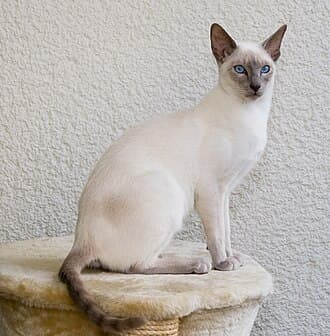
The domestic cat sheds tiny flakes of skin (dander) along with dried saliva and sebaceous-gland secretions that carry potent allergenic proteins. The dominant allergen, Fel d 1, is a small secretoglobin protein produced in the cat's salivary, sebaceous, and anal glands and spread over the fur by grooming; its microscopic particles remain airborne for hours and stick to clothing, walls, and furniture.
🇺🇸 History in the United States
Animal danders were among the earliest inhalant allergens used in American skin testing after allergy extracts became common in the 1910s-1920s, and cat sensitivity was long recognized clinically, but the responsible molecule remained unknown for decades. Cat ownership surged in postwar America, helped by the 1947 invention of clay cat litter, which made fully indoor cats practical and increased household exposure. In 1974, Ohman and colleagues in Boston purified the major feline allergen ('cat allergen 1', later Fel d 1) in the Journal of Immunology paper 'Allergens of Mammalian Origin III', making it one of the first mammalian allergens ever characterized; it was later shown to account for sensitization in up to 95% of cat-allergic patients. The gene for Fel d 1 was cloned in 1991 (Morgenstern et al.), enabling recombinant diagnostics and the first cat-peptide immunotherapy trials in the US in the 1990s. US exposure studies in the 1980s-1990s, notably by Thomas Platts-Mills' and Robert Wood's groups, showed Fel d 1 is carried on particles small enough to stay airborne and is detectable in virtually all US homes, schools, and public buildings, even those without cats. The CDC's NHANES III survey (1988-1994) found about 17% of the US population skin-test positive to cat, and NHANES 2005-2006 confirmed cat as one of the most common indoor sensitizations, with roughly a quarter to a third of asthmatic Americans sensitized.
📍 US Distribution
Exposure occurs nationwide and year-round in the roughly one-third of US households that keep cats, and passively in schools, workplaces, and cat-free homes because Fel d 1 travels on clothing.
🔗 Cross-Reactivity
Fel d 1 itself has limited cross-reactivity, but cat serum albumin (Fel d 2) cross-reacts with dog and other mammalian albumins and, rarely, with pork ('pork-cat syndrome').