Molds
Alternaria Alternata
Alternaria alternata (Alt a 1)
Season: Late spring through first frost, peaking in summer and early fall (can be year-round in warm regions)
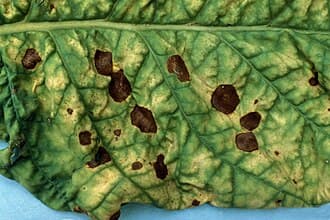
Alternaria alternata is a dark-pigmented outdoor mold that grows on plants, crops, soil, and decaying vegetation, releasing large club-shaped spores into dry summer air. Its major allergen, Alt a 1, is a unique beta-barrel protein found only in fungi, and sensitization to it is one of the strongest known fungal risk factors for asthma.
🇺🇸 History in the United States
American allergists began linking airborne mold spores to asthma in the late 1920s and 1930s, when aerobiological surveys by pioneers such as Samuel Feinberg in Chicago and early culture-plate studies showed Alternaria to be among the most abundant spores over the US grain belt, and mold extracts entered US skin-testing panels in that era. Through mid-century, Alternaria became recognized as the signature seasonal mold of the American Midwest and Great Plains, where grain harvesting sends enormous spore clouds aloft in late summer. Its clinical gravity was established by a landmark 1991 New England Journal of Medicine study by O'Hollaren, Yunginger, and colleagues at the Mayo Clinic, which found that 10 of 11 young asthmatics from the upper Midwest who suffered sudden respiratory arrest in summer or early fall were Alternaria-sensitive, versus 31% of controls — an odds ratio near 200 for potentially fatal asthma. Alternaria sensitization was also tied to childhood asthma in the arid Southwest, notably in the Tucson epidemiologic studies of the 1990s, where it outranked pollens as an asthma risk factor. The major allergen Alt a 1 was cloned in the 1990s, and NHANES III (1988-1994) found 12.9% of the US population skin-test positive to Alternaria. A 2006 JACI analysis of the national NSLAH housing survey detected Alt a 1 in over 95% of US homes and linked higher indoor levels to active asthma symptoms.
📍 US Distribution
Highest outdoor exposure occurs in the Midwest farm belt, Great Plains, and Southwest during dry, warm weather, especially around grain fields and harvesting; the allergen is also measurable in dust of most US homes.
🔗 Cross-Reactivity
Alternaria cross-reacts with related dematiaceous molds such as Ulocladium and Stemphylium, with weaker cross-reactivity to Cladosporium and other fungi.