Grasses
Bermuda Grass
Cynodon dactylon
Season: Late spring through early fall (roughly May-September) in most of the South, with nearly year-round pollination possible in the warmest areas such as southern Florida, Texas, Arizona, and California.
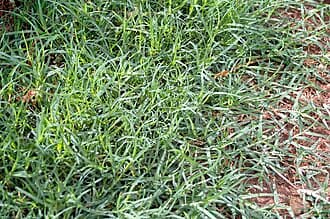
Bermuda grass is a low-growing, wiry, warm-season perennial grass that spreads aggressively by creeping runners, underground stems, and seed. Likely native to tropical Africa, it thrives in heat and full sun and is one of the most widely used lawn, pasture, and sports-turf grasses in warm climates, as well as a stubborn agricultural weed.
🇺🇸 History in the United States
Bermuda grass is not native to North America; it was introduced during the colonial era, reportedly brought to Savannah, Georgia in 1751 by Governor Henry Ellis, presumably from Africa or India (its name reflects an earlier stopover in Bermuda). It spread rapidly across the South, and by 1807 it was already listed as one of the principal grasses of the Southern states in James Mease's Geological Account of the United States. Through the 19th century it became the foundation of Southern pasture and hay production on land too hot for northern grasses, even as farmers simultaneously cursed it as a nearly ineradicable weed of cotton and row crops. In the 20th century, breeding programs (notably USDA and Georgia's Coastal Plain Experiment Station, which released the hybrid 'Coastal' bermudagrass in 1943) turned it into a major forage and turfgrass industry, and it now covers millions of acres of lawns, golf courses, and pastures across the South. Its allergy significance grew with its range: as clinical allergy developed in the early-to-mid 20th century, Bermuda grass pollen was recognized as the dominant grass allergen of the southern and southwestern US, where it can shed pollen most of the year. Its major allergen, Cyn d 1, was characterized in the late 1980s-early 1990s and is bound by IgE in roughly 76-100% of Bermuda-grass-allergic patients, cementing its status as one of the most clinically important pollens in warm-climate America.
📍 US Distribution
Today Bermuda grass is established across the southern half of the United States, from the Southeast through Texas to California, and as far north as the transition zone (roughly Maryland to Kansas); it is a leading lawn, turf, and pasture grass throughout the South and Southwest.
🔗 Cross-Reactivity
Bermuda grass pollen shows only limited cross-reactivity with the temperate (Pooideae) grasses such as timothy and ryegrass, so patients in warm climates often need Bermuda-specific testing and treatment, though it cross-reacts with related warm-season grasses.