Weeds
Mugwort
Artemisia vulgaris
Season: Late summer through fall, roughly August to October.
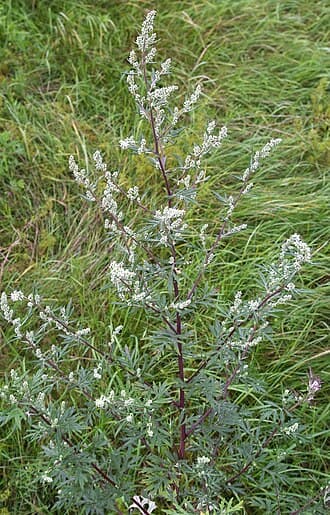
Mugwort is an aromatic perennial of the sagebrush genus with dark green, deeply lobed leaves that are silvery-white underneath. It spreads aggressively by underground rhizomes along roadsides, riverbanks, and urban waste ground, and its small greenish flower heads shed abundant wind-borne pollen in late summer.
🇺🇸 History in the United States
Mugwort is a Eurasian herb with a long Old World reputation in medicine, brewing, and folklore, and it reached North America very early in the colonial era. Seed may have been brought as early as the 16th century by Jesuit missionaries in Canada, and European colonists in the 1600s carried the herb deliberately for ointments and teas while also introducing it accidentally in the soil ballast that sailing ships dumped at Atlantic port cities. Through the 18th and 19th centuries it continued to arrive repeatedly as a contaminant of ship ballast and later of imported nursery stock, which seeded persistent colonies around eastern seaports. From these beachheads it spread along railways, roadsides, and river corridors, becoming a fixture of urban and industrial waste ground in the Northeast. It is now documented in at least 34 states and every Canadian province and is formally classified as an invasive plant in states such as New York and Connecticut. As allergy science matured in the 20th century, mugwort was recognized as one of the most clinically important weed pollens of the Artemisia genus — in Europe it affects an estimated 10-14% of pollen-allergic patients — and it contributes to late-summer hay fever in the American Northeast, while related native sagebrushes dominate Artemisia allergy in the West.
📍 US Distribution
Most abundant in the northeastern and mid-Atlantic states and urban areas of the Midwest; reported in at least 34 states.
🔗 Cross-Reactivity
Mugwort pollen (Art v 1) cross-reacts with ragweed and other Artemisia species, and is linked to celery-mugwort-spice food allergy syndrome.