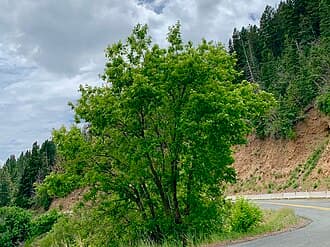
Trees
Box Elder
Acer negundo
Season: Early to mid-spring, roughly March through May, peaking in late April to early May in the Midwest.
Box elder, also called ash-leaved maple, is a fast-growing, scrappy native maple with compound leaves unlike any other maple. It is the only common maple that is fully wind-pollinated, which makes it the most allergenic maple in North America.
🇺🇸 History in the United States
Box elder is a native American tree and the most widely distributed of all North American maples, ranging naturally from coast to coast and from Canada to Guatemala, with its best growth in the bottomland hardwood forests of the lower Ohio and Mississippi River valleys. Long before European settlement, Plains tribes tapped it for sap and sugar much as eastern peoples tapped sugar maple. Because it tolerates drought, cold, and poor soils and grows extremely fast, settlers planted it heavily for shade, street trees, and windbreaks in prairie towns during the 19th century, and it became a mainstay of Great Plains shelterbelt programs, especially after the Dust Bowl drought of the 1930s spurred massive federal tree-planting efforts. Those same qualities let it spread aggressively into disturbed ground, fencerows, and floodplains far beyond where it was planted. As a shade tree its reputation declined in the 20th century because of weak, storm-prone wood and the nuisance boxelder bugs it attracts, but by then it was ubiquitous. Allergists came to recognize box elder as a major spring aeroallergen: it is the only common maple that is entirely wind-pollinated, it was among the first standardized tree-pollen extracts (Thermo Fisher's allergen code t1), and studies have tied box elder and maple pollen surges to asthma hospitalizations, including research in Kansas, with sensitization rates around 33% reported among atopic patients in New York City.
📍 US Distribution
Found in nearly every one of the lower 48 states, most abundant in the Midwest, Great Plains, and river bottoms of the central and eastern US, and naturalized in western cities and riparian corridors.
🔗 Cross-Reactivity
Box elder pollen cross-reacts with other maples (Acer species).